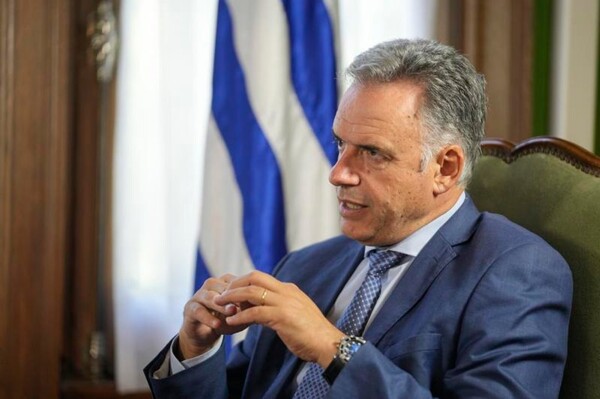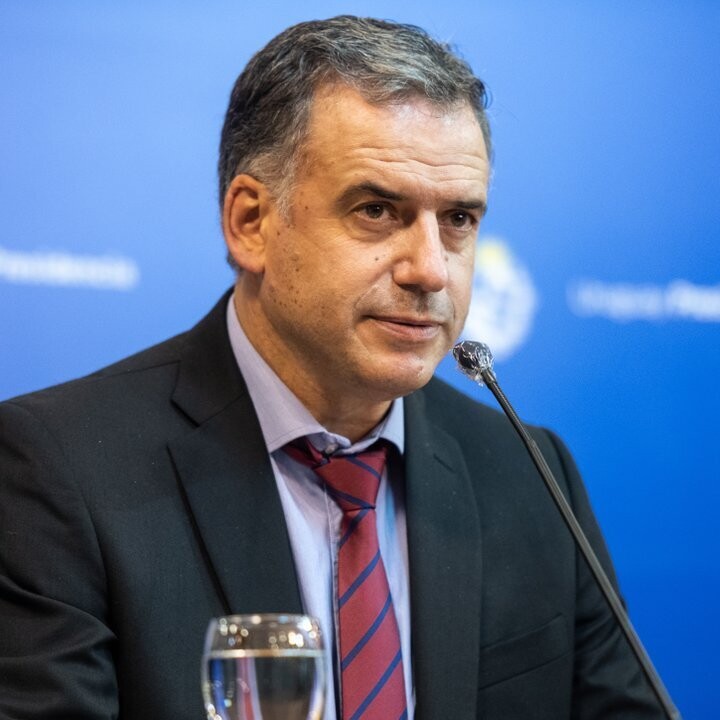
The president of Uruguay, Yamandú Orsi, stated that despite his country having a "good institutional relationship" with Argentina, and despite the different ideological orientations between the two governments, he assured that at times "it seems we are playing by ear." "In the area of bilateral relations, Argentina and Uruguay are doing well, and this has to do with a number of commitments assumed that are being fulfilled," explained Orsi, who took office a year ago and came to government through the Broad Front, a center-left coalition. "Let's loosen our obligations a bit or flex the conditions a little and go for the European Union, for EFTA, for Asian countries. Today Mercosur walks almost on autopilot, with no major differences," he remarked, according to the Argentine News Agency. He also highlighted that in the context of Mercosur, "despite the differences between the leaders of the countries and the styles of government, it is a moment in which we put the pedal to the metal and started towards what we had always proposed." "I don't remember a Mercosur so unanimous on the path of continuing to seek markets and coordinate strategies; we are heading towards the European Union and Asian countries, and we are walking on autopilot with no major differences," he specified. Regarding the relationship with Argentina, he noted that his government began "with Gerardo Werthein as chancellor, whom we knew here because he comes to Uruguay very often, but then with (Pablo) Quirno the relationship remained as fluid as before. It's true, we are playing by ear," he asserted. After highlighting that in Uruguay "our parties enjoy quite a bit of legitimacy compared to other places," he indicated that despite having a 3.1% inflation rate, they are "concerned because it fell too much" and could "complicate" other items in the economy. "In any case, (the low inflation) opens up an important possibility to deindex some costs," he emphasized in an interview with Radio Mitre. "The inflation data is very good," he highlighted, and explained that Uruguay reached this low level because "a tacit agreement (between the parties) was reached that with macroeconomic issues you cannot mess around."